31.01Now migrated to Firebase Hosting|Massive Stability Upgrades

Smart Dashboard:
A Personal IoT ShowcaseBeta
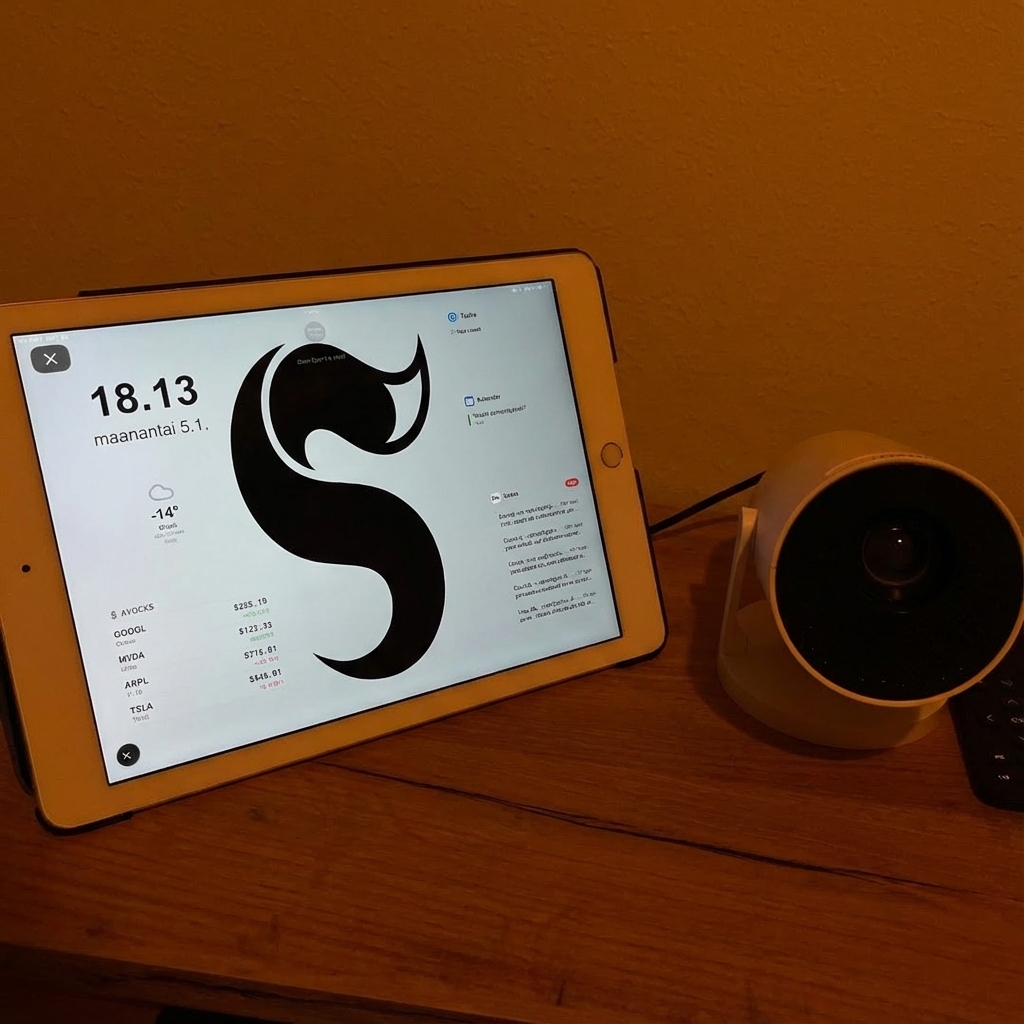
A high-performance, customizable dashboard designed to breathe new life into legacy devices. This project explores the intersection of real-time data integration, local hardware repurposing, and modern web architecture.
Project Deep-Dive
A closer look at the motivation, engineering decisions, and technical challenges behind the Smart Dashboard.
Inspiration & Use Case
Reducing e-waste through hardware repurposing.
Smart Dashboard was born from a newfound interest in home automation, tempered by the reality of high entry costs and fragmented ecosystems. Many existing solutions require expensive, proprietary hardware and offer limited customizability. I realized that my aging iPad—sitting unused for years—was a high-quality display that just needed the right software. After searching for a flexible, web-based alternative that could integrate my Google ecosystem without the need for a dedicated smart screen, I decided to build my own. This project transforms legacy hardware into a powerful, personalized information hub.
Technical Foundation
Scalable architecture with Firebase & TypeScript.
The application is anchored by Firebase, providing a flexible foundation that integrates seamlessly with the Google ecosystem. Built with a unified TypeScript and CSS codebase, it bridges diverse services—from Spotify to public Art Institute APIs—normalizing heterogeneous data into a cohesive real-time interface.
Backend Infrastructure
n8n workflows with lightweight AI processing.
The backend is powered by n8n, an open-source workflow automation tool that orchestrates scheduled data fetching across multiple free-tier APIs. Lightweight AI models preprocess and normalize incoming data—handling tasks like news summarization and content filtering—before pushing structured results to Firebase collections. The entire backend runs on a 2016 HP laptop worth around 30 euros today, proving that powerful home automation does not require expensive infrastructure.
Development Process
From 6 to 20 widgets via AI-first growth.
Development shifted from a humble, manually-coded project with 6 basic widgets to a comprehensive suite of nearly 20. This transition was accelerated by the release of Google Antigravity (Gemini 3.0, Claude 4.5), which radicalized the engineering workflow. By moving to a zero-manual-code approach, the focus shifted to architecting complex behaviors and deep customization, significantly enhancing the overall user experience.
Technical Notes
Extreme efficiency on legacy hardware.
To maintain cost-effective operations, the system employs a dedicated backend optimized with lean AI models and scheduled jobs to manage API usage. This focus on extreme efficiency allows the entire backend to run reliably on a repurposed 12-year-old laptop, proving home automation can be both powerful and sustainable.


